Copper-Housed Rupture Disc for Gas Cylinder Applications
Posted on: Apr-06-2026

Manufacturer: Varem Technical Solutions LLP Website: www.varemsolution.com
1. Product Overview
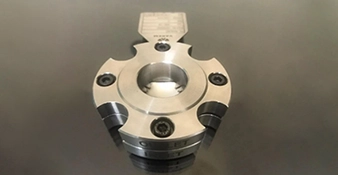
The Copper-Housed Rupture Disc is a non-reclosing, pressure-actuated safety device designed for integration into gas cylinder valves. The device protects cylinders from catastrophic rupture caused by excessive internal pressure resulting from fire exposure, overfilling, or elevated ambient temperatures.
The rupture disc is engineered specifically for:
- CO₂ cylinders
- CFC / Refrigerant cylinders
- Liquefied compressed gas cylinders
- Applications requiring CG-1, CG-4, and CG-5 configurations
This device bursts at a predetermined calibrated pressure to allow controlled gas venting and prevent structural failure of the cylinder.
2. Applicable Standards & Design Alignment
- CGA Type CG-1 – Pressure-Activated Rupture Disc
- CGA Type CG-4 – Rupture Disc with 165°F Fusible Alloy
- CGA Type CG-5 – Rupture Disc with 212°F Fusible Alloy
- DOT Cylinder Test Pressure Requirements
- UL Certification Testing – Aligned (Testing in Progress)
3. Technical Specifications
Device Type: Non-reclosing rupture disc Actuation Mode: Static pressure differential Housing Material: Copper Disc Material: High-strength metallic diaphragm (application dependent) Size Range: From 3 mm ID × 8 mm OD to 10 mm ID × 16 mm OD Burst Pressure Range: 30 barG to 425 barG Burst Tolerance: ±7% of the requested burst pressure Installation: Designed for valve body integration
4. Functional Principle
The rupture disc operates on differential pressure across a calibrated metallic diaphragm.
When internal cylinder pressure exceeds the specified burst rating:
- The diaphragm reaches its tensile strength limit
- Controlled rupture occurs
- The opening allows rapid gas venting
- Cylinder structural integrity is preserved
The device is single-use and must be replaced after activation.
5. Application Engineering Considerations
- CO₂ Cylinders: CO₂ is stored as a liquefied compressed gas. Under fire or elevated temperature exposure, vapor pressure rises rapidly. The rupture disc prevents cylinder explosion by venting before structural failure.
- CFC / Refrigerant Cylinders: Designed to manage pressure increases caused by thermal expansion of liquefied gases.
6. Design Advantages – Copper Housing
- High thermal conductivity for improved heat response
- Enhanced corrosion resistance in CO₂ environments
- Excellent machinability for micro-size precision
- Stable clamping geometry
- Improved sealing integrity within compact valve bodies
7. Burst Pressure Engineering
Burst pressure is determined based on:
- Cylinder service pressure
- DOT minimum test pressure (typically 5/3 of service pressure)
- Gas expansion characteristics
- Valve assembly design constraints
Validated burst range achieved: 30 barG to 425 barG
Each production batch undergoes:
- Hydrostatic / Pneumatic burst verification, following the UL testing guidelines
- Dimensional inspection
- Visual and surface inspection
- Leak integrity validation
8. Performance Characteristics
Response Time: Instantaneous upon reaching burst pressure Flow Capacity: Full opening for rapid depressurization Reclosing: No (device must be replaced after rupture) Fatigue Resistance: Withstands normal service pressure cycles below burst threshold
9. CGA Configuration Compatibility
- CG-1: Pressure-actuated rupture disc. Most commonly used in CO₂ cylinders.
- CG-4: Rupture disc backed by 165°F fusible alloy. Requires both elevated temperature and internal pressure rise for activation.
- CG-5: Rupture disc backed by 212°F fusible alloy. Suitable for higher ambient temperature environments.
Our rupture disc is designed for integration into these valve assemblies based on OEM requirements.
10. Quality Assurance & Traceability
- Controlled raw material procurement
- Thickness and dimensional calibration control
- Batch traceability
- Burst pressure validation records
- UL-aligned test documentation (in progress)
11. Installation Guidelines
- Install only within approved valve design
- Ensure clean and defect-free seating surface
- Apply specified installation torque
- Avoid mechanical damage during handling
- Do not reuse after activation